Why our cards have no words on them
Most feelings products teach children to decode a standard face. We do the opposite.
Most feelings products teach children to match a standard face to a standard word. Barrett's research shows that is not how emotions work. There is no universal fingerprint for a feeling stamped on the face. We build emotions from the situation, the body, and the words we have.
So our cards are open illustrations, deliberately unlabeled, and children tell us what they see.
Show a class an elephant surrounded by flames. A conditioned adult will almost always see angry. Many children see hot, or "so excited he is on fire," and they are not wrong. Adults have been trained onto one reading. Children have not, and that openness is exactly the muscle we are growing.
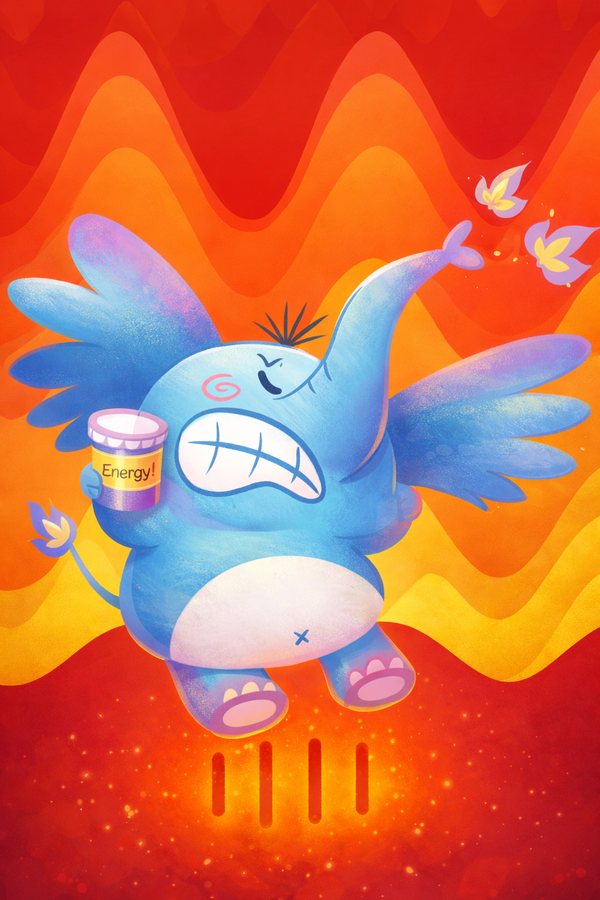
Most adults see angry. Many children see hot.
This leads to the rule teachers hear on their first day: never tell a child their interpretation is wrong.
It has a practical side too. Cards with no words need no translation. The same deck works in an English classroom, a Mandarin classroom, or a bilingual one.